Chengdu: The City That Taught Me How to Slow Down
Chengdu isn't trying to impress you. It's too busy drinking tea, eating hotpot, and living well. Here's what makes Sichuan's capital one of China's most liveable — and loveable — cities.
If you ask someone in Beijing or Shanghai what they think of Chengdu, you’ll probably hear the same word: comfortable. In Chinese, they’ll say 安逸 (ānyì) — a word that means something between “pleasant” and “perfectly content.” It’s the defining word of this city. Nobody in Chengdu is in a rush to prove anything. The pace is slower, the food is spicier, and the quality of life is quietly among the best in China.
I grew up visiting Chengdu regularly. My relatives there always seemed happier than the ones in faster cities — not richer, just more present. After living in Finland, I realize that Chengdu and the Nordics share something unexpected: a deep belief that a good life doesn’t require constant hustle.
A modern city with ancient rhythms
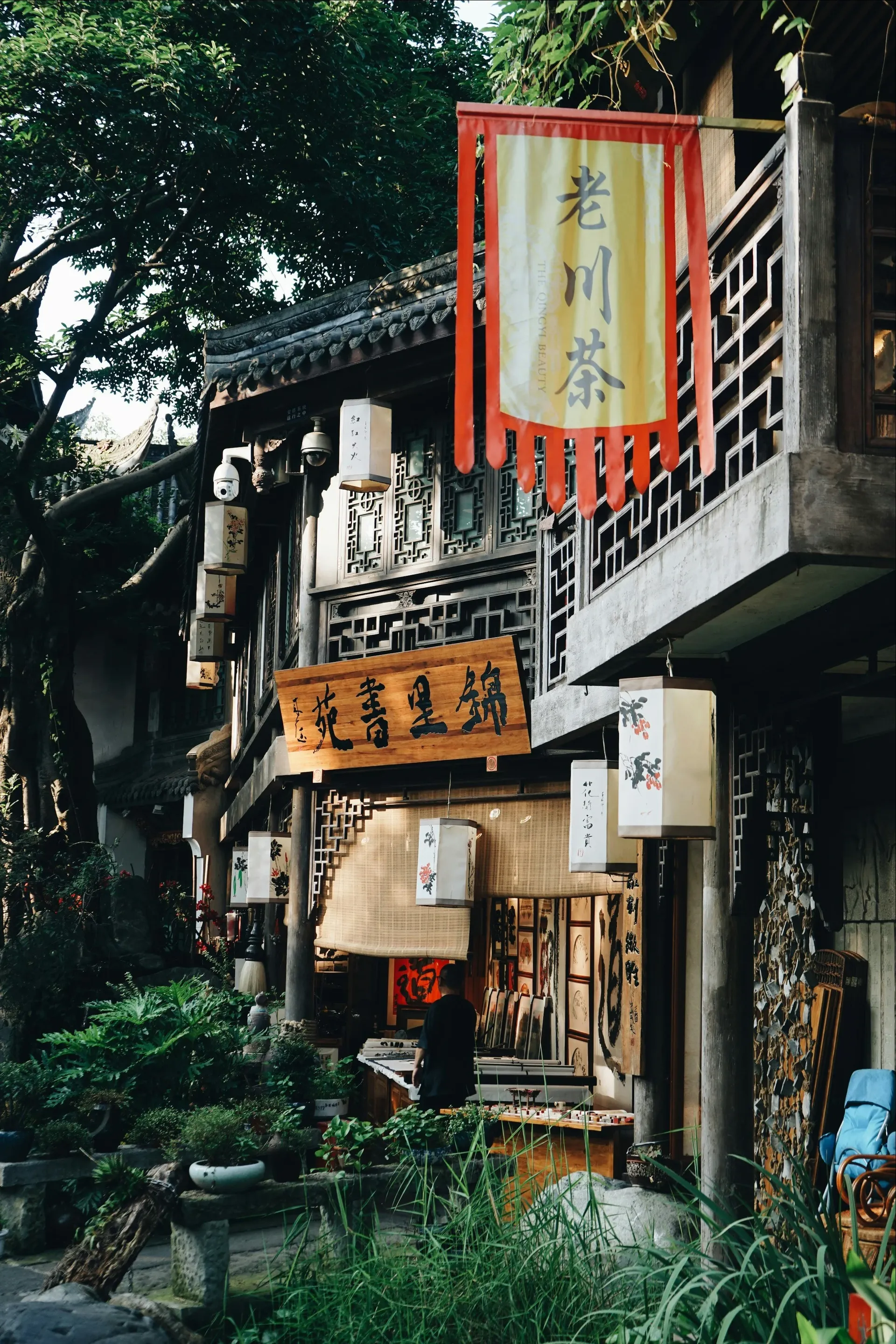
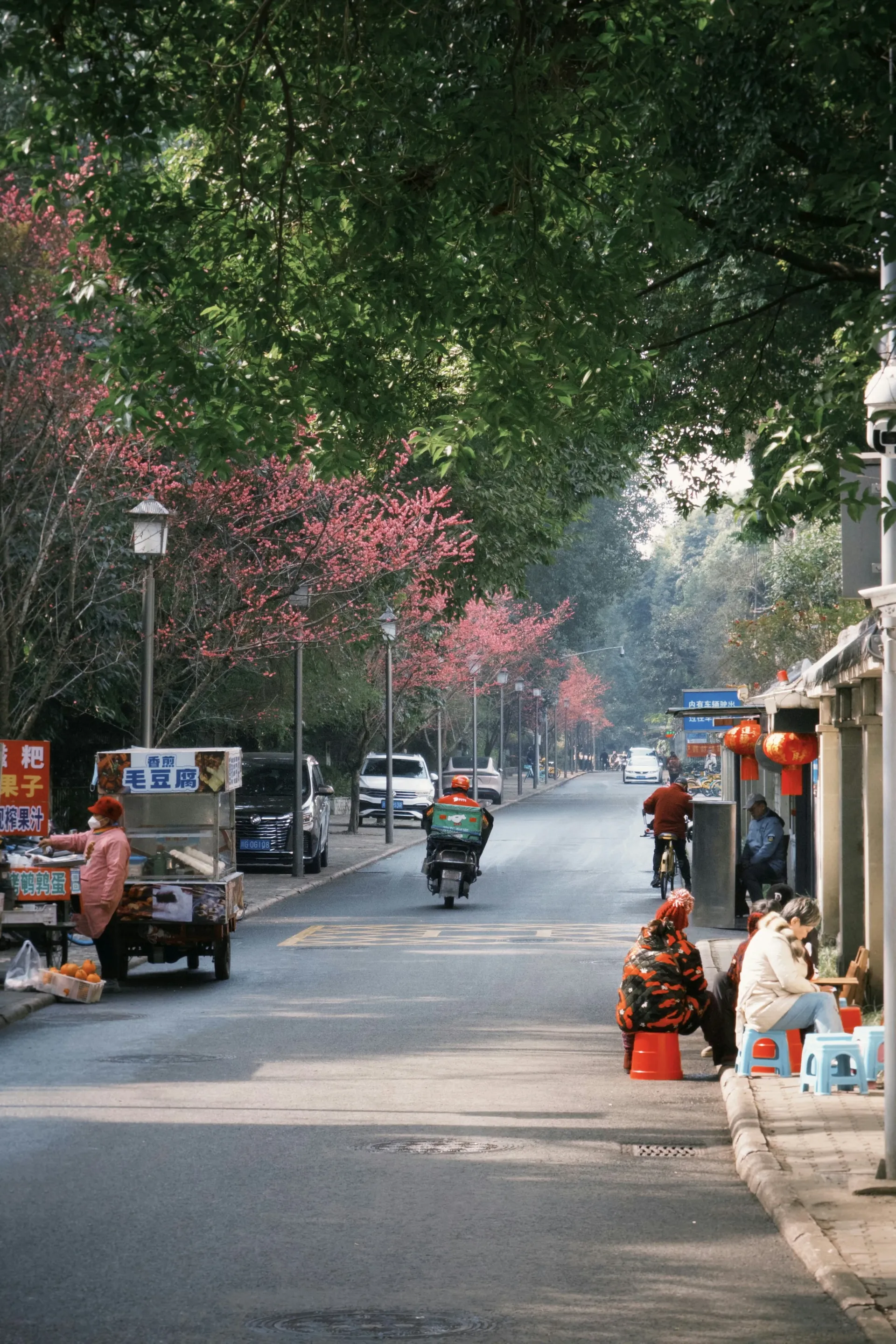
Chengdu is a megacity of over 21 million people, but it doesn’t feel like one. The secret is its teahouse culture. On any given afternoon, parks across the city fill with people sitting in bamboo chairs, sipping covered-bowl tea (盖碗茶), playing mahjong, or simply watching the world go by.
People’s Park (人民公园) is the beating heart of this culture. Walk in on a Saturday and you’ll see retirees dancing, parents flying kites, and a famous “marriage market” corner where parents post ads looking for partners for their adult children. It’s chaotic, endearing, and completely real.
This is not something staged for tourists. It’s daily life. Chengdu’s residents genuinely prioritize leisure in a way that most Chinese cities don’t.
The food capital of China
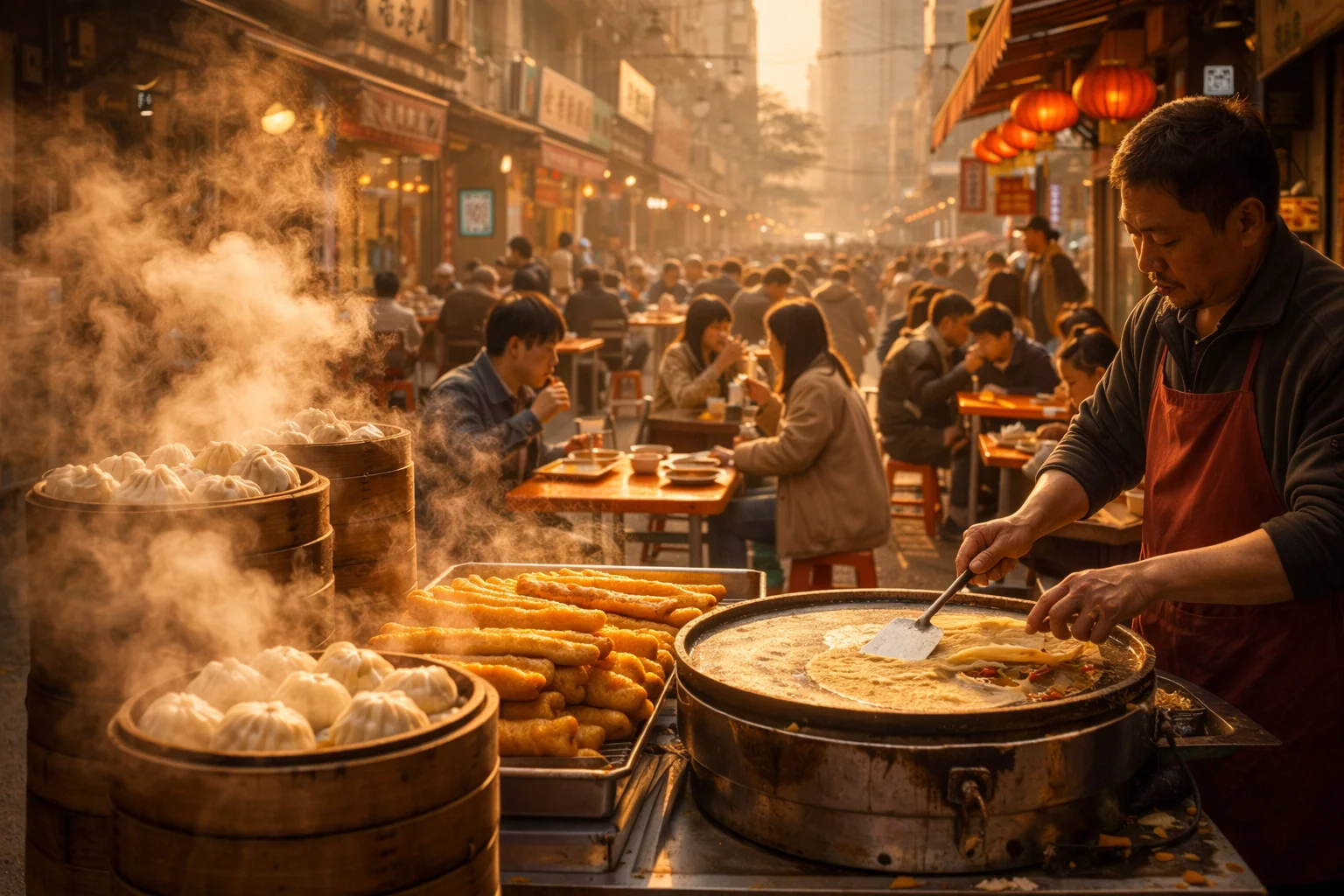
If you love spicy food, Chengdu is paradise. If you don’t — well, you might change your mind here.
Sichuan cuisine (川菜) is one of China’s eight great culinary traditions, and Chengdu is its capital. The city was designated a UNESCO City of Gastronomy in 2010 — the first city in Asia to receive the title.
The signature flavour is 麻辣 (málà) — a combination of numbing Sichuan peppercorn and chili heat. It’s not just “spicy.” The numbness from huājiāo (花椒) creates a tingling sensation that’s completely unique.
Must-try dishes:
- Hotpot (火锅) — communal dining at its best. Choose your broth, cook your own ingredients.
- Mapo tofu (麻婆豆腐) — silky tofu in a fiery peppercorn sauce. The authentic version bears no resemblance to what you get abroad.
- Dan dan noodles (担担面) — sesame, chili, Sichuan pepper, minced pork. A perfect street lunch.
- Twice-cooked pork (回锅肉) — sliced pork belly, wok-fried with fermented bean paste and leeks. The dish every Sichuan family grows up with.
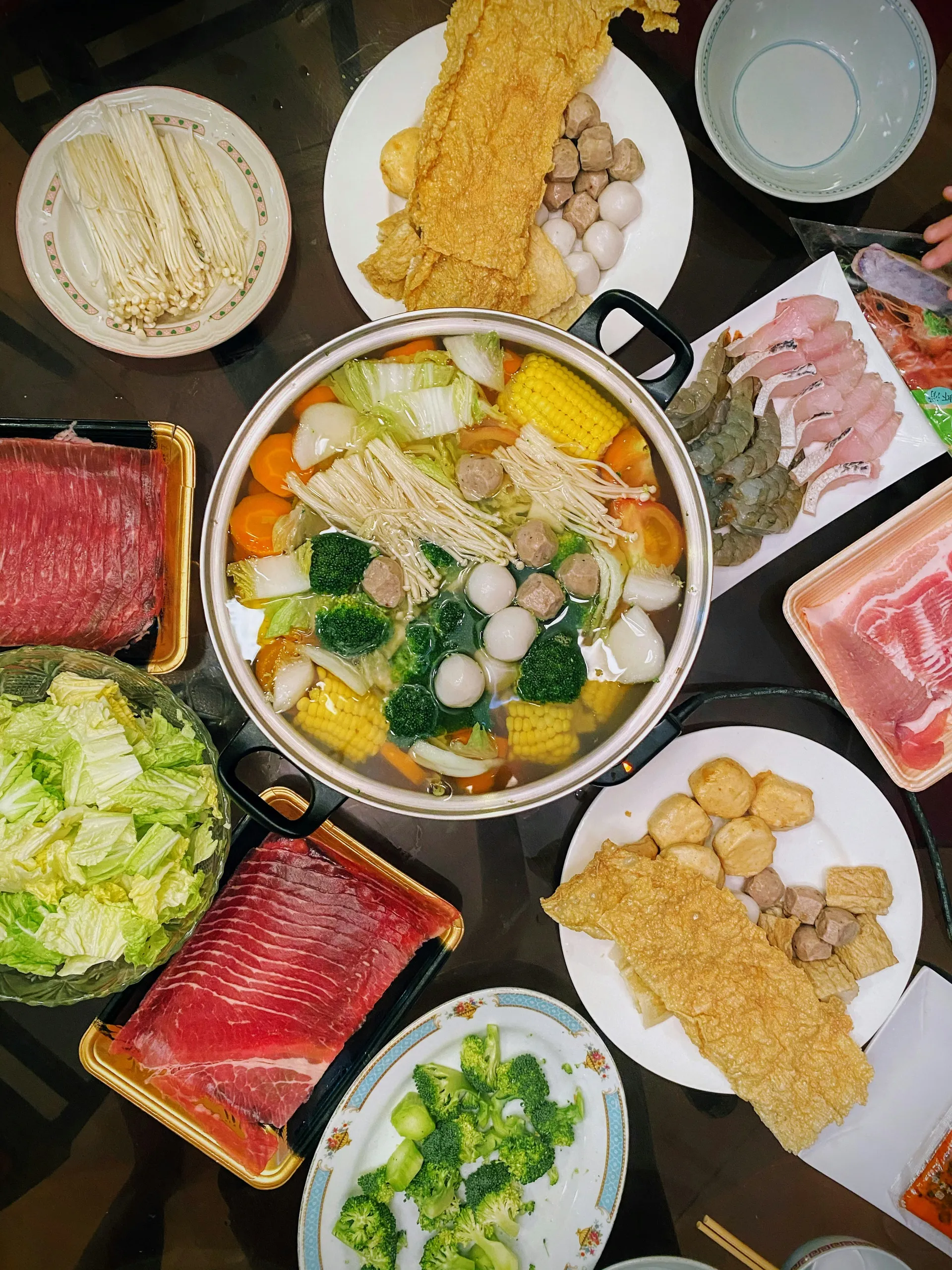
Don’t worry if you can’t handle extreme spice — Chengdu also excels at subtle, aromatic flavours. Try sweet water noodles (甜水面), red oil wontons (红油抄手), or Zhong dumplings (钟水饺) for a gentler introduction.
Pandas — yes, they’re worth the visit
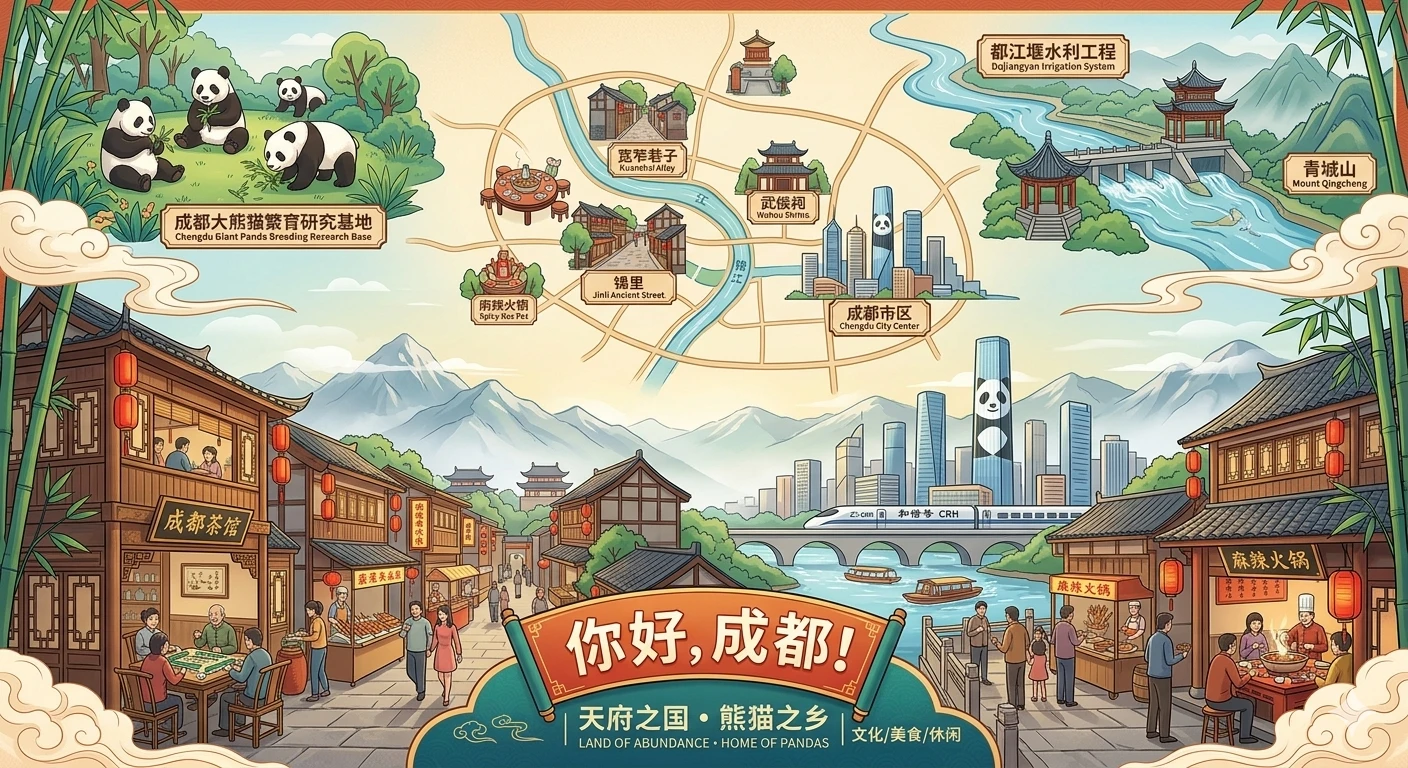
I know what you’re thinking — is it just a tourist trap? It’s not. The Chengdu Research Base of Giant Panda Breeding (成都大熊猫繁育研究基地) is a legitimate conservation facility that’s done remarkable work.
Go early — ideally before 9am — when the pandas are most active (they eat and then sleep for most of the day). You’ll see giant pandas of all ages, from adults lazing on platforms to tiny cubs tumbling in nursery enclosures. The red pandas in a separate area are equally charming.
The newer Dujiangyan Panda Base, about an hour outside the city, offers a quieter experience with fewer crowds.
Tip for European visitors: Book tickets online in advance through the official WeChat mini-program or a travel agent. Walk-up tickets can sell out, especially on weekends.

Getting around
Chengdu’s metro system is modern, clean, and expanding rapidly — it now has over 13 lines covering most areas you’d want to visit. A single trip costs 2–7 RMB (about €0.25–0.90). You can pay with Alipay or WeChat Pay by scanning at the gate.
For shorter distances, shared bikes (Meituan or Hello bikes) are everywhere. Taxis and Didi (China’s Uber equivalent) are cheap and reliable.
Where to stay and what to expect
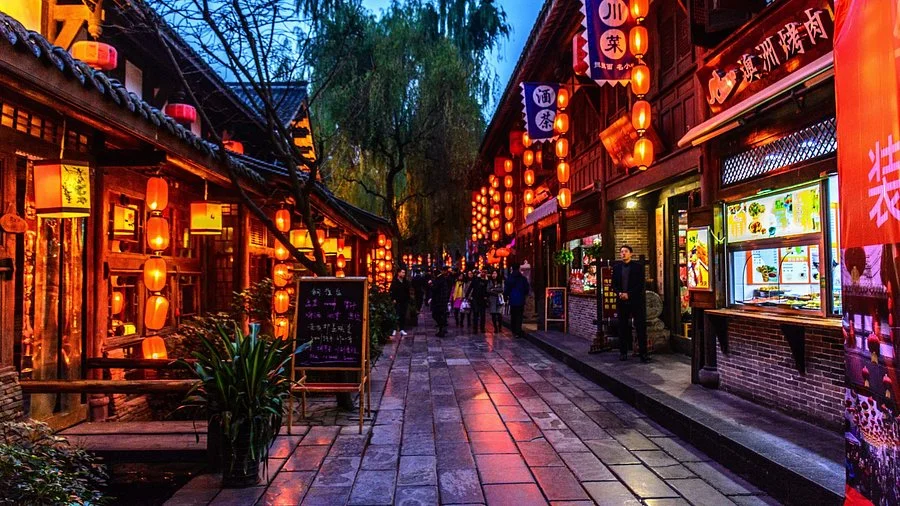
For first-time visitors, the Chunxi Road / Taikoo Li area puts you in the centre of modern Chengdu — shopping, nightlife, excellent food. Kuanzhai Alley (宽窄巷子) is more atmospheric, with renovated Qing-dynasty courtyard houses now home to cafés and boutiques.
Budget travellers can find clean hostels for €8–15/night. Mid-range hotels run €30–60. Luxury international brands are all present if you prefer that.
A few practical notes:
- Most places accept mobile payment only (Alipay, WeChat Pay). Bring a Chinese-linked card or have a travel-friendly payment app set up before you arrive.
- English signage exists in the metro and major attractions, but is limited elsewhere. Learn a few key phrases or have a translation app ready.
- The weather is humid and often overcast. Chengdu locals joke that “dogs bark at the sun” because they see it so rarely.
Why Chengdu, specifically?
China has many amazing cities. What makes Chengdu special is its attitude. It’s a city that’s genuinely figured out work-life balance — long before that phrase became a corporate buzzword. People eat well, socialise often, and don’t apologize for taking an afternoon off to play mahjong in the park.
For a Nordic visitor, there’s a surprising familiarity to it. The value placed on quietness, good food, and not overworking — these things translate across cultures.
If Beijing is China’s brain and Shanghai is its wallet, Chengdu is its stomach and its soul.